Δευτέρα 6 Ιουλίου 2015

Το αφιέρωμα του antivirus για τις οικογένειες με LGBT γονείς


we_are_family_masthead_logo-copy

Σύμφωνα με ένα παλιό σχολικό εγχειρίδιο οι μορφές των οικογενειών είναι τρεις. Η παραδοσιακή πυρηνική οικογένεια (μαμά, μπαμπάς, παιδί), η εκτεταμένη (ότι η πυρηνική συν τη γιαγιά και τον παππού, κλπ.) και η μονογονεϊκή (όταν το παιδί μεγαλώνει με τον έναν γονέα). Μα κάτσε! Εγώ τις βγάζω περισσότερες. Αλήθεια, εσύ πότε μορφές οικογένειας γνωρίζεις;
Ενώ η Ελλάδα βρίσκεται ένα βήμα πριν από την επέκταση του συμφώνου συμβίωσης για τα ομόφυλα ζευγάρια, απέχει έτη φωτός από το να αναγνωρίσει από αυτό που λέμε ισότητα στην οικογένεια. Καθημερινά οι οικογένειες με LGBT γονείς στη χώρα μας παλεύουν με τη νομική ανυπαρξία και τους κοινωνικούς στερεοτυπισμούς και σε πείσμα των καιρών διεκδικούν την ύπαρξή τους. Από αυτό λοιπόν το σημείο ξεκινά και το αφιέρωμά μας. Στόχος μας να αναδιατυπώσουμε την απάντηση του “παραπάνω” εγχειριδίου, δίνοντας ένα πληρέστερο ορισμό. Οι μορφές της οικογένειας είναι περισσότερες και κάποιες από αυτές (επώνυμα ή ανώνυμα) μιλούν στο Antivirus για την καθημερινότητα τους, θέλοντας – εν τέλει- να σας μεταφέρουν το μήνυμα ότι η ανάγκη για στοργή και αγάπη δεν μπορεί να αναχαιτιστεί από κανένα νομικό και κοινωνικό εμπόδιο.

“Να μην είναι τα παιδιά μας ξεκρέμαστα…”

Η Στέλλα και η Χάρις είναι ένα τέτοιο ζευγάρι. Είναι μαζί από το 2006. Η Χάρις τότε είχε ήδη τρία παιδιά από προηγούμενο ετεροκανονικό γάμο και το 2007 απόκτησαν μαζί με τη Στέλλα άλλα δύο με εξωσωματική. Και κάπου εδώ ξεκινούν τα προβλήματα. Από την πρώτη κιόλας στιγμή ο δεύτερος γονιός ήταν σαν να μην υπάρχει, στις αίθουσες αναμονής στα ιατρεία και στα νοσοκομεία δίπλα στα straight ζευγάρια η Χάρις ένιωθε ότι αντιμετωπίζεται ως η “συνοδός ιδιωτική νοσοκόμα” της συντρόφου της. Ακόμα και την ώρα που γεννήθηκαν τα παιδιά δεν ήταν εύκολο να μπει να τα δει στην αίθουσα των νεογνών γιατί μπορούσε να μπει μόνο “ο μπαμπάς”.
Η αναγνώριση των οικογενειών μας λέει η Χάρις, θα μου δώσει τον σεβασμό που μου στερούν, μεγαλώνω εξίσου αυτά τα παιδιά αλλά δεν το αναγνωρίζει κανένας άλλος εκτός από τα ίδια. Στο σχολείο, στο γυμναστήριο ή όπου αλλού βρισκόμαστε δεν έχω ρόλο και λόγο”.
Η Στέλλα επισημαίνει ότι, “χωρίς νόμους δεν θα εκπαιδευτεί ποτέ η κοινωνία γιατί οι άνθρωποι φοβούνται να κάνουν ορατές τις οικογένειες που δημιουργούν. Όσο κι αν μέσα από το διαδίκτυο η κοινωνία βλέπει πλέον ότι σε όλο τον κόσμο υπάρχουν οικογένειες σαν τις δικές μας και σε πολλές χώρες είναι ήδη αναγνωρισμένες εδώ είναι σαν να μην υπάρχουμε.”
Παρά τις δυσκολίες και οι δύο επισημαίνουν ότι δεν μετάνιωσαν ποτέ για την επιλογή του να γίνουν γονείς από κοινού και τα μικρά είναι σαφώς δύο χαρούμενα και ευτυχισμένα παιδιά που σίγουρα θα ήταν περισσότερο χαρούμενα, ευτυχισμένα και ασφαλή εάν η οικογένειά τους ήταν εξίσου αναγνωρισμένη με τις οικογένειες των φίλων τους. Βλέπουν και οι δύο σαν μόνο δρόμο για να γίνει αυτό τον συνεχή αγώνα και την διεκδίκηση ισότητας σε επίπεδο δικαιωμάτων μέσα από τον ακτιβισμό.
Κι οι δύο θεωρούν πως δεν πρέπει να συνδέεται η φροντίδα των παιδιών με το γάμο των γονιών τους και ότι ο νόμος θα πρέπει να δίνει το δικαίωμα να μπορούν να αναγνωρίζουν τα παιδιά που μεγαλώνουν και να δεσμεύονται απέναντί τους.
Τα ζευγάρια ανεξάρτητα από το εάν είναι ετερόφυλα ή ομόφυλα μπορεί να χωρίσουν. Κάπως λοιπόν πρέπει να διευθετηθεί το θέμα της γονικής μέριμνας, ώστε να μην μένουν ξεκρέμαστα παιδιά και γονείς χωρίς πλαίσιο δικαιωμάτων και υποχρεώσεων.

Όπως συνέβη ακριβώς και στην περίπτωση της Ράνιας, η οποία μετά από χρόνια κοινής ζωής με τη σύντροφό της και αφού απέκτησαν μαζί ένα παιδί, αποφάσισαν να χωρίσουν.

Στιγμιότυπο 2015-07-06, 5.55.04 μ.μ.“Πρέπει να το παλέψεις…”

“Αποφασίσαμε να κάνουμε τη δική μας οικογένεια. Την εποχή εκείνη δεν υπήρχε κανένα νομικό πλαίσιο. Ήμασταν στο σκοτάδι. Πήγαμε σε ένα γυναικολόγο και μας είπε ότι θα χρειαστούμε το σπέρμα ενός δότη. Αρχικά σκεφτήκαμε να απευθυνθούμε σε κάποιον gay άνδρα για να μας βοηθήσει. Δεν πέτυχε. Θα γινόταν πολύ προσωπικό. Τελικά απευθυνθήκαμε σε μια τράπεζα σπέρματος για να κάνουμε σπερματέγχυση. Και οι δύο θα μπορούσαμε να μπούμε σε αυτή τη διαδικασία. Αποφασίσαμε να το κάνει η σύντροφός μου. Η επιλογή έγινε καθαρά για τυπικούς λόγους. Συγκεκριμένα γιατί εκείνη είχε ασφάλεια ιατρικής περίθαλψης…”
Ρωτάμε τη Ράνια αν πίστευε ότι θα αντιμετώπιζε ποτέ πρόβλημα σχετικά με την κηδεμονία του παιδιού, μιας και στη χώρα μας οι οικογένειες ομόφυλων ζευγαριών δεν αναγνωρίζονται, παρά μόνο ως μονογονεϊκές.
“Ξέραμε, όταν το αποφασίσαμε, ότι δεν υπάρχει κάποιο σχετικό νομοθετικό πλαίσιο. Τότε όμως δεν πιστεύαμε ότι θα χρειαζόταν. Ήμασταν μαζί. Η ανάγκη εμφανίστηκε όταν χωρίσαμε κάποια χρόνια μετά. Άρχισαν τα δύσκολα και τότε συνειδητοποίησα πόσο σημαντικό είναι να αναγνωρίζεσαι και ως γονέας τυπικά. Όταν η επικοινωνία με την πρώην σύντροφό μου έγινε ιδιαίτερα δύσκολη, δεν υπήρχε κανένας τρόπος να διεκδικήσω οποιοδήποτε δικαίωμα απέναντι στο παιδί. Δεν φαινόμουν πουθενά. Μόνο η πρώην σύντροφός μου. Προσπάθησα να το παλέψω μέσω οργανώσεων. Οι πιθανότητες επιτυχίας όμως ήταν ελάχιστες. Πρέπει να υπάρξει και για εμάς αυτή η νομική αναγνώριση… Ευτυχώς οι σχέσεις με την πρώην σύντροφό μου, βελτιώθηκαν αρκετά από τότε.”
Αναρωτιόμαστε πόσο εύκολο είναι να μεγαλώνει ένα παιδί με δύο μαμάδες σε μια χώρα σαν την Ελλάδα.
“Από την πρώτη στιγμή το παιδί έγινε αποδεκτό από όλους. Από την οικογένειά μας και τον περίγυρο μας. Θυμάμαι, βέβαια όταν πήγαμε να γράψουμε το παιδί μας στον παιδικό σταθμό δεν μας δέχτηκαν, επειδή ήμασταν μια λεσβιακή οικογένεια. Πήγαμε σε έναν άλλο και όλα εντάξει. Κάποιες φορές επίσης, είχαμε πρόβλημα με κάποιες άλλες μαμάδες. Αλλά γενικά δεν αντιμετωπίσαμε κάποιο πρόβλημα. Αυτά σε σχέση με το περιβάλλον. Όσον αφορά τη ανατροφή του παιδιού, δεν φοβηθήκαμε κάτι. Είχαμε αποφασίσει από την αρχή να λέμε την αλήθεια. Από πολύ νωρίς του εξηγούσα ότι οι οικογένειες μπορεί να είναι με δυο μαμάδες, με δυο μπαμπάδες ή με έναν μπαμπά και μια μαμά. Το είχε αποδεχτεί.
Μόνο όταν μεγαλώνοντας και ενώ πήγε στο Δημοτικό αντιμετώπισε πρόβλημα με αυτό και ζήτησε όταν είμαστε έξω να με αποκαλεί θεία. Όταν είμαστε οι δυο μας, με λέει μαμά. Γιατί είμαι η μαμά του. Είναι ένα υγιές και ευτυχισμένο παιδί. Αν και υπάρχουν δυσκολίες, αν προσέξεις και μεγαλώσεις το παιδί χωρίς να το πληγώσεις, θα φτάσει σε σημείο που από μόνο του θα υπερασπιστεί όλο αυτό. Χρειάζεται αλήθεια. Όλα τα υπόλοιπα είναι ομοφοβίες των άλλων, όχι των παιδιών.
Ξέρεις δεν υπάρχει μεγαλύτερη ευτυχία από το να μεγαλώνεις ένα παιδί. Όσοι σκέφτονται να μπουν στη διαδικασία της οικογένειας να το τολμήσουν και να μη μείνουν σε νομικές και κοινωνικές δυσκολίες. Πρέπει να το παλέψουν. Απλά να προσέξουν πολύ με ποιον/α θα το κάνουν. Από εκεί και πέρα είναι απόλυτο δικαίωμα όλων μας να μπορούμε να κάνουμε ένα παιδί, μια οικογένεια.
Εφόσον το παιδί ζει και μεγαλώνει σε ένα υγιές περιβάλλον θα υπερασπιστεί και το ίδιο όλα αυτό.”

Την έντονη ανάγκη να μάθει ο κόσμος ότι οι οικογένειες με LGBT γονείς υπάρχουν, τονίζει και μία άλλη γυναίκα (που επιθυμεί να διατηρήσει την ανωνυμία της), η οποία μαζί με τη σύντροφό της απευθύνθηκαν σε μια τράπεζα σπέρματος, με στόχο να κάνουν το δικό τους παιδί.

“Ο κόσμος πρέπει να μάθει τι γίνεται, ότι δεν είμαστε εξωγήινοι…”

“Επιλέξαμε τη διαδικασία της σπερματέγχυσης μέσω μια τράπεζας του εξωτερικού. Η επιλογή του δότη έγινε σύμφωνα με τις φωτογραφίες που είδαμε. Θέλαμε να έχει χαρακτηριστικά παρόμοια με τα δικά μου, μιας και η σύντροφος μου θα ήταν αυτή που θα μετείχε της διαδικασίας. Σκεφτήκαμε και εμείς αρχικά να χρησιμοποιήσουμε το σπέρμα ενός gay φίλου μας, αλλά μετά αλλάξαμε γνώμη. Δεν θέλαμε να έχουμε μπερδέματα. Θέλαμε να είμαστε ανεξάρτητες.
Όταν μπήκαμε σε αυτή τη διαδικασία φοβόμασταν. Ξέραμε ότι θα είναι δύσκολο. Προσπαθούμε όμως να τους δώσουμε τις σωστές βάσεις. Δεν ντρεπόμαστε για αυτό που είμαστε, οπότε δεν υπάρχει κανένας λόγος να ντρέπεται και το παιδί. Όταν γίνεται αυτό, όλα είναι φυσιολογικά. Μέχρι στιγμής δεν μας έχει πει κανείς τίποτα. Δεν έχουμε αντιμετωπίσει δυσκολίες. Τις περιμένουμε όμως.”
Στην ερώτηση τι θα ήθελε να αλλάξει, ώστε να γίνουν τα πράγματα πιο εύκολα, η ίδια απαντά.
“Σε νομικό επίπεδο θα θέλαμε να υπάρχει κάτι που να αναγνωρίζει και τον/την σύντροφο ενός ομόφυλου ζευγαριού. Ώστε να υπάρχει μεγαλύτερη ασφάλεια για το παιδί. Να υπάρχει αυτή η επιβεβαίωση. Να φανταστείς ότι τώρα με τη σύντροφό μου έχουμε κάνει μια συμβολαιογραφική πράξη με την οποία η ίδια δηλώνει ότι επιθυμεί να αναλάβω το παιδί σε περίπτωση που της συμβεί κάτι. Δεν ξέρουμε βέβαια πόσο αξία έχει η πράξη αυτή. Κανονικά έπρεπε να γίνεται αυτόματα μιας είμαι και εγώ μητέρα του.
Θα ήταν καλό επίσης, να υπάρχουν στο σχολείο (και γενικά) βιβλία, σειρές αντίστοιχες με τέτοιες οικογένειες, ώστε το παιδί να μπορέσει να ταυτιστεί. Να γίνει πιο εύκολο για το ίδιο. Ο κόσμος πρέπει να καταλάβει πως υπάρχουμε και ότι δεν είμαστε εξωγήινοι. Ότι έχουμε πολλή αγάπη. Η επιλογή μας είναι συνειδητή και δεν γίνεται τυχαία. Πρέπει να μπουν στη θέση μας. Να νιώσουν την καρδιά μας και καταλάβουν την ανάγκη μας να δημιουργήσουμε κάτι δικό μας.”
Ακόμα και στις μέρες μας αρκετός κόσμος πιστεύει τα LGBT άτομα δεν μοιράζονται την ίδια ανάγκη για οικογένεια. Λες και ο σεξουαλικός προσανατολισμός ή ταυτότητα φύλου είναι αυτά που καθορίζουν τον ρόλο του γονιού.


Στη συζήτηση μπαίνει ο Δημήτρης, ένας gay άνδρας που πήρε και αυτός την αποφασίσει να κάνει τη δική του οικογένεια.

Στιγμιότυπο 2015-07-06, 5.54.44 μ.μ.“Τα παιδιά πρέπει να μεγαλώνουν με αλήθεια…”

“Η απόφαση να αποκτήσει κάποιος παιδί είναι μία πολύ σοβαρή και συνειδητή υπόθεση. Το ότι ένα παιδί έρχεται μετά από σκέψη, οργάνωση και μία διαδικασία χωρίς να προκύπτει από μία εγκυμοσύνη που προέρχεται από ερωτική επαφή (κάτι που συμβαίνει και σε οποιοδήποτε ετεροφυλόφιλο ζευγάρι που αντιμετωπίζει δυσκολίες στην σύλληψη) επιφορτίζεται με μία πολύ μεγάλη θέληση. Προσωπικά θα μπορούσα να πω πως γενικότερα η οικογένεια ως έννοια είναι πολύ σημαντική και πάντα αισθανόμουν περισσότερο άνετα μέσα σε αυτή, όποτε για εμένα ήταν πολύ φυσικό να προχωρήσω στη δημιουργία της δικής μου οικογένειας.

Ένας gay άνδρας θα αντιμετωπίσει όλες τις δυσκολίες που αντιμετωπίζει οποιοσδήποτε πατέρας. Το μόνο που πιστεύω ότι είναι απαραίτητο και πρέπει να είναι προϋπόθεση είναι να είναι ο ίδιος ανοικτά gay, να έχει λύσει τα δικά του προβλήματα ταυτότητας και το περιβάλλον του να γνωρίζει πολύ καλά ποιος είναι. Σε καμία περίπτωση ένα παιδί δεν πρέπει να έρθει για να κλείσει οποιαδήποτε “τρύπα” προσωπική, ψυχολογική ή κοινωνική. Τα παιδιά πρέπει να μεγαλώνουν με αλήθεια. Είναι το μόνο όπλο απέναντι σε οτιδήποτε λεχθεί ή ακουστεί στο μέλλον. Το παιδί πρέπει να ξέρει ποιος και τι είναι ο γονιός του και αν αυτός είναι σε σχέση να συμπεριφέρεται χωρίς ενοχή και να εκφράζεται φυσικά όπως κάθε άνθρωπος που αγαπάει τον σύντροφό του. Τα παιδιά αισθάνονται ασφαλή όταν το περιβάλλον τους είναι ήσυχο και υπάρχει γύρω τους αγάπη. Ένας gay άνδρας δεν κάνει τίποτε διαφορετικό και στο σπίτι του δεν συμβαίνει τίποτε άλλο απ’ ότι σε οποιαδήποτε οικογένεια. Δηλαδή δίνει μπιμπερό, αλλάζει πάνες, λέει παιδικά τραγούδια, νανουρίζει, ξενυχτάει, σε γενικές γραμμές όταν κάποιος παίρνει τον ρόλο του γονιού δεν υπάρχει αυτό που σε άλλες περιπτώσεις θα λέγαμε διαφορετικότητα. Όλα τείνουν σε ένα σκοπό: να μεγαλώσεις το παιδί σου με τον καλύτερο τρόπο.
Οι αναρωτήσεις του τύπου “τι θα του πεις όταν γυρίσει και σε ρωτήσει…” ή “τι θα κάνεις όταν στο σχολείο του πουν για τον μπαμπά του…” είναι απλά φοβίες των άλλων που ως γνωστό υπάρχουν πάντα και εξαπολύονται με οποιαδήποτε μορφή από ανθρώπους που φοβούνται πρώτα τον εαυτό τους και μετά τους δίπλα τους που έχουν σε σύγκριση με αυτούς μία διαφορετική αντιμετώπιση της ζωής και διαφορετικές νόρμες. Ο φόβος λοιπόν ας μείνει στους άλλους. Όταν θα έρθουν οι στιγμές, γιατί θα έρθουν, να μιλήσεις στο παιδί σου θα το κάνεις με τον ίδιο φυσικό τρόπο που το κάνουν όλοι όταν το παιδί μπει στην περίοδο με τα “γιατί”. Και θα το κάνεις σωστά γιατί μέχρι τότε θα έχεις δουλέψει με όπλο την αλήθεια και θα έχεις δημιουργήσει ένα οικογενειακό περιβάλλον που το παιδί θα έχει αισθανθεί μία ασφάλεια αδιαμφισβήτητη. Άλλωστε πάρα πολλά παιδιά έχουν μεγαλώσει σε μονογονεικές οικογένειες χωρίς αυτό από μόνο του να τους έχει δημιουργήσει επιπρόσθετα προβλήματα.”
Ζητάμε από τον Δημήτρη να στείλει το μήνυμα του στα ζευγάρια που σαν και αυτόν σκέφτονται να κάνουν ένα παιδί.
“Από τη στιγμή που το έχουν σκεφτεί καλά και είναι απόλυτα σίγουροι γι’ αυτή την μεγάλη χωρίς αναίρεση αλλαγή στη ζωή τους, θα πρέπει να ξέρουν ότι δεν είναι πολύ απλή υπόθεση και κυρίως να γνωρίζουν πολύ καλά το νομικό κομμάτι ώστε να μην βρεθούν προ εκπλήξεων. Στην Ελλάδα η παρνθεσία δεν αφορά στους ανύπανδρους άνδρες. Για να προχωρήσει κανείς σε παρενθεσία θα πρέπει πρώτα να ζητήσει την άδεια από τα ελληνικά δικαστήρια και μέχρι στιγμής ο νόμος αναφέρεται σε ζευγάρια που λόγω προβλημάτων υγείας καταφεύγουν σε αυτήν. Όσον αφορά την τεκνοθεσία, τα ιδρύματα είναι πάρα πολύ προσεκτικά και δεν θα έδιναν ένα παιδί σε ένα μόνο άνδρα τη στιγμή που είναι στοίβες οι αιτήσεις από παντρεμένα ζευγάρια που περιμένουν για χρόνια τη σειρά τους. Ακόμα και στις ιδιωτικές υιοθεσίες πρέπει κανείς να είναι πάρα πολύ προσεκτικός και να γνωρίζει ότι θα υπάρχει για μεγάλο χρονικό διάστημα επιτήρηση και τελική έκθεση από κοινωνικούς λειτουργούς στο δικαστήριο, όπου δεν είναι απαραίτητο να είναι θετική. Ο μόνος τρόπος για να γίνει κανείς πατέρας είναι να το συναποφασίσει με κάποια γυναίκα της απολύτου εμπιστοσύνης του και φυσικά σε οποιαδήποτε περίπτωση να έχει από κοντά για σύμβουλό του έναν πολύ καλό δικηγόρο.”

“Είναι δύσκολο να αποδομείς τα πρότυπα…”

Η περίπτωση της Ραλλίας μας έφερε σε επαφή με το θέμα της τρανς γονεϊκότητας. Η Ραλλία είναι μια 48χρονη τρανς γυναίκα που αποφάσισε να μπει σε διαδικασία επαναπροσδιορισμού φύλου, ενώ είχε ήδη αποκτήσει δύο παιδιά (από ετεροκανονικούς γάμους).
“Η δική μου περίπτωση είναι κάπως ιδιάζουσα. Έχω κάνει με τις συζύγους μου δύο παιδιά, μια κόρη ηλικίας 19 ετών και έναν μικρότερο γιο. Αν και αναγνωρίζομαι ως ο πατέρας των παιδιών αυτών, σύμφωνα με τον νόμο που υπάρχει στην Ελλάδα, αν αλλάξω τα χαρτιά μου και αναγνωριστώ επίσημα ως γυναίκα, σταματώ να θεωρούμαι κηδεμόνας τους. Σαν να μην ήμουν ποτέ ο πατέρας τους. Σαν το άτομο που ήμουν πριν να μην υπήρχε ποτέ. Αυτόματα η γυναίκα παίρνει το παιδί και αναγνωρίζεται ως μοναδική κηδεμόνας. Πρέπει να το σκεφτώ πολύ καλά πριν αλλάξω τα χαρτιά μου και αρχίζω να ζω μόνιμα”.

Μοιραία ρωτάμε τη Ραλλία αν έχει μιλήσει με τα παιδιά της για αυτό και πως είναι η μεταξύ τους σχέση.
“Θεωρώ ότι το γεγονός ότι αν και τρανς γυναίκα, στις σεξουαλικές μου προτιμήσεις μού αρέσουν οι γυναίκες, είμαι δηλαδή τρανς γυναίκα λεσβία, βοήθησε την κόρη μου να καταλάβει πιο εύκολα αυτό που συνέβη. Ήταν περίπου 16 ετών. Δεν χρειαζόταν να αντιμετωπίσει την σκέψη ότι ο πατέρας της πηγαίνει με άνδρες. Άρα ο μπαμπάς δεν είναι ομοφυλόφιλος, ουφ ευτυχώς είναι όλα οκ λοιπόν… Επίσης, η εικόνα μου είναι (κατ΄επιλογή μου) σε μια ανδρόγυνη κατάσταση. Αυτό βοήθησε κάπως σε κοινωνικό επίπεδο. Γενικά, χρειάστηκε και από τη μεριά μου να κάνω μελέτες, έρευνες, σκέψεις ώστε να φτάσω στις απόψεις που έχω για το φύλο. Ο γιος μου είναι ακόμα πολύ μικρός για να του το εξηγήσω. Το καταλαβαίνει όμως ενστικτωδώς και αυτό είναι εντυπωσιακό. Κάποια στιγμή με ρώτησε: “Μπαμπά είσαι γυναίκα;”.
Μου πήρε σχεδόν 3 χρόνια. Ήθελε κόπο. Πρέπει να το κάνεις σιγά, σιγά. Πρώτα απ’ όλα να δείξεις στο παιδί την αγάπη σου και να του εξηγήσεις ότι δεν τη χάσει ποτέ. Εδώ πρέπει να πω κάτι που κατά τη γνώμη μου είναι πολύ σημαντικό. Πρόκειται για μια αμφίδρομη διαδικασία. Όση δύναμη και χρόνος χρειάζεται ένα άτομο να ανοιχτεί στο παιδί του, άλλη τόσο δύναμη και χρόνος χρειάζεται και το ίδιο το παιδί για να συνειδητοποιήσει τη νέα κατάσταση, Μου πήρε χρόνια για να καταλήξω εδώ που είμαι με τον εαυτό μου. Πως περιμένω λοιπόν από κάποιον να το αντιληφθεί αμέσως;
Στην περίπτωση μου με βοήθησε η σωστή ενημέρωση. Τώρα η κόρη μου είναι 19 και είναι σε θέση να καταλάβει τι μου συμβαίνει. Με ακολουθεί, έρχεται μαζί μου σε οργανώσεις, της δίνω υλικό. Έχουμε μια πάρα πολύ καλή σχέση. Οι αλλαγές έρχονται σιγά σιγά. Είναι δύσκολο να αποδομείς τα πρότυπα. Το πιο σωστό είναι να περιμένεις. Αν μπορεί να αλλάξει κάτι είναι μόνο μέσω της εκπαίδευσης.
Το φύλο σου και η δημιουργία οικογένειας αποτελούν δύο ουσιαστικές ανάγκες. Ανάγκες που δεν τις ελέγχεις, απλά υπάρχουν και εσύ τρέχεις από πίσω τους. Είναι μονόδρομος. Σαφώς και υπάρχουν δυσκολίες σε όλο αυτό. Ξεπερνιούνται όμως!”


Κυριακή 5 Ιουλίου 2015

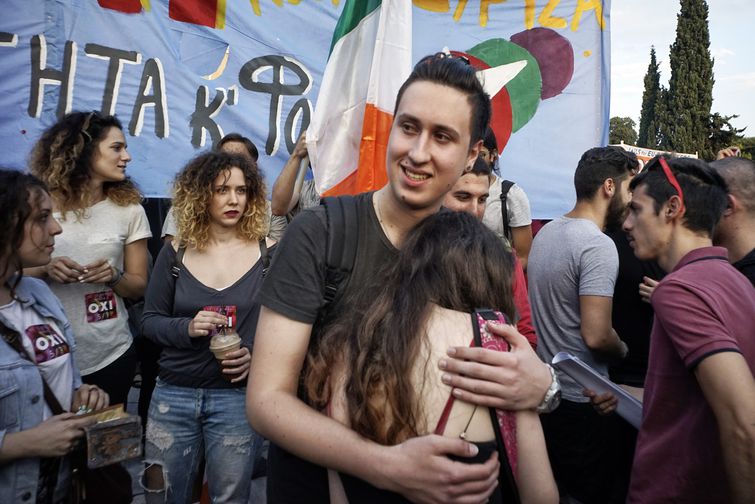
σήμερα πήγα και ψήφισα ήρεμος. Με χαμόγελο. Χωρίς θυμό. Με ψυχραιμία. Με μηδέν ευρώ στην τσέπη


Στην αρχή, δεν το περίμενα η αλήθεια είναι ότι θα γίνει δημοψήφισμα. Την ώρα που το έμαθα ήμουν έξω και εκείνη τη στιγμή το μόνο που με ένοιαζε ήταν θα του αρέσω κι εγώ του αγοριού απέναντι. Τελικά όχι (τυχαίο;).
Από την επόμενη μέρα, άρχισα να διαβάζω, να παρακολουθώ συζητήσεις, και από την αρχή έκλεινα προς το όχι. Άρχισα, συμμαζεμένα αρχικά να παίρνω και θέση υπερ του. Όχι επειδή το λέει ο Σύριζα, δεν είμαι ταγμένος σε κανένα κόμμα άλλωστε αλλά γιατί αυτό καταλάβαινα εγώ ως σωστό.


Φουντώνοντας η συζήτηση και η πόλωση, άρχισα να βλέπω τα ΜΜΕ μετά μανίας να υποστηρίζουν το ναι, να εκφοβίζουν, να απειλούν. Να μου λένε πως αν βγει το όχι, δεν θα έχω τα φάρμακα που ως οροθετικός έχω ανάγκη για να διατηρώ την υγεία μου. "Φίλοι" να μου λένε ότι θα γίνουμε "Ρωσία" αναφερόμενοι στην κατάσταση γύρω από τα ανθρώπινα δικαιώματα που αν βγούμε από την Ε.Ε (σίγουροι ότι αυτό θα γίνει, ενώ δεν είναι έτσι) ως αδερφή θα στερηθώ σε πολύ μεγαλύτερο βαθμό. Ότι δηλαδή, με την επιλογή μου, θα υπονομεύσω τους ίδιους τους αγώνες μου. Και να με λοιδορούν γι' αυτό. Μου λέγανε επίσης ότι με το όχι μου παίρνω το μέρος της χρυσής αυγής και άλλα τέτοια.

Κάπου εκεί κατάλαβα ότι αυτό που γίνεται είναι πόλεμος. Ότι ένα ολόκληρο Σύστημα και κάποιες και κάποιοι που είτε το υπερασπίζονται είτε το φοβούνται έχουν βαλθεί, με όποιο μέσο, να μας πείσουν ότι είμαστε ελέφαντες. Να το παίζουν θύματα οι θύτες. Μόνο που δεν πείστηκα. Πείσμωσα. Και άρχισα πολύ εντονότερα να υπερασπίζομαι το όχι. Γιατί κάπου εκεί κατάλαβα, η μάλλον επιβεβαίωσα, ότι το θέμα είναι ταξικό. Και δεν φοβήθηκα, κατ' αρχήν γιατί δεν τα πίστεψα όλα αυτά.
Αλλά κυρίως γιατί την αξιοπρέπεια και τα πιστεύω μου τα βάζω πάνω απ' όλα. Και εφόσον πίστευα στην επιλογή του όχι, αυτήν υπερασπίστηκα. Γιατί μπορώ να καταλάβω ποιοι είναι οι πραγματικοί σύμμαχοι και ποιοι όχι. Δεν δέχτηκα τον χυδαίο εκφοβισμό για τα φάρμακα μου. Δεν δέχτηκα ότι υπομονεύω το ίδιο μου το κίνημα και την ίδια μου την ελευθερία. Γιατί την δικιά μου την ελευθερία δεν περιμένω να μου την χαρίσουν ή να την επιβάλλουν "από πάνω". Ξεκινάει από μέσα μου, από τους ανθρώπους γύρω μου, από τις διεκδικήσεις που μαζί κάνουμε. Η δικιά μου η ελευθερία ξεκινάει από τα κάτω και δεν νικιέται έτσι εύκολα. Δεν δέχτηκαν να με βάλουν στο πλευρό κανενός Κασιδιάρη, οι ίδιοι άνθρωποι που όταν εγώ έτρωγα ξύλο από φασίστες στους δρόμους σφύριζαν αδιάφορα ή αναρωτιόντουσαν "μήπως κι εγώ προκάλεσα". Άκουσα κάποιον "σελέμπριτι" να λέει πως "Όποιος δεν έχει δοκιμάσει το χαβιάρι δεν του λείπει". Ε λοιπόν, εγώ το έχω δοκιμάσει και το έφτυσα. Έχω περάσει από την "τάξη" τους και έμεινα από απουσίες. Και επειδή έχω βρεθεί κι εκεί, καταλαβαίνω πολύ καλά πως λειτουργεί. Δεν το ζω πρώτη φορά.
Τελικά ήρθα σε αντιμαχία, απειλήθηκα, φώναξα, χλευάστηκα, πιστεύω ότι δεν έκανα όμως άνισες ή άδικες επιθέσεις, έχασα "φιλίες". Αλλά δεν πειράζει. Όλα έχουν ένα τίμημα. Έτσι σήμερα πήγα και ψήφισα ήρεμος. Με χαμόγελο. Χωρίς θυμό. Με ψυχραιμία. Με μηδέν ευρώ στην τσέπη και τσιγάρα που πήρα βερεσέ από τον μετανάστη ψιλικατζή της γειτονιάς, που πριν προλάβω να ολοκληρώσω την φράση "Επειδή δεν έχω..." μου τα είχε δώσει στο χέρι, λέγοντας "καταλαβαίνω". Και όσο έχουμε ανθρώπους που καταλαβαίνουμε και μας καταλαβαίνουν, δεν φοβάμαι.


Ήρεμος λοιπόν πήγα, αλλά φίλη, τους βρόντηξα ένα ΟΧΙ που ελπίζω ν' ακούστηκε ως τις Βρυξέλλες και πίσω. Και ο,τι και να γίνει, εγώ το βράδυ θα κοιμηθώ με την συνείδηση μου καθαρή.
Κι εδώ θα είμαστε.

Πέμπτη 2 Ιουλίου 2015

The Greek crisis: 9 questions you were too embarrassed to ask


http://www.forbes.com/sites/johntharvey/2015/07/07/five-reasons-greeks-were-right/3/


Young Greeks protest on Monday, June 29.Milos Bicanski/Getty Images


Updated by  on June 30, 2015, 9:22 a.m. ET  


Greece is falling apart. The unemployment rate is 25 percent — down from a peak of 28— and four in ten children live in poverty. In the wintertime, Athens is overcome with smog as residents too poor to afford electricity burn everything and anything they can to stay warm. The income of the country's rich, once inflation and taxes are taken into account, is back where it was in 1985. The poor are back where they were in 1980. And this weekend, things hit a new low, as fear of a total financial meltdown grew so widespread that Greeks emptied over a third of the country's ATMs on Saturday in a desperate attempt to pull out as much money as possible before the banks collapse.
The crisis is at a pivotal moment now, but it has been brewing for years. Despite what you may have heard, it's not happening because the Greek government spent beyond its means and now is suffering the consequences. It's happening because Europe isn't sure whether it wants to be one country or many, and has in the meantime adopted policies that have created a humanitarian catastrophe for the Greek people.

1) What, in as few words as possible, is happening in Greece?


Greece Calls For A Vote On Proposed Bailout
Milos Bicanski/Getty Images
Greek Prime Minister Alexis Tsipras, who was elected with his Syriza party in January.

The 2008 financial crisis blew a hole in Greece's budget, which was already not in great shape. The Greek government took billions of euros in bailout money in 2010 from the European Union and International Monetary Fund. The lenders required Greece to implement crushing spending cuts and tax increases, which contributed to skyrocketing unemployment and plummeting living standards.
Since then, Greece has faced a choice: either stick with the bailouts and endure the pain of austerity, or reject the terms of the bailout — likely leading to default and, possibly, leaving the eurozone entirely.
Greeks elected a new government in January that tried for a third option: renegotiating the terms of the bailout to require less severe austerity measures. But this failed, partly because Greek leaders have no leverage, and partly because European politicians fearedthat granting Greece's demands would encourage other countries who've accepted bailout money — like Spain, Portugal, or Ireland — to rise up as well.
This new Greek government has punted the decision to voters: On July 5, Greece will hold a national referendum on whether to accept lenders' latest proposal and keep going with austerity, or reject the proposal and, in all likelihood, abandon the euro.

2) Why has the euro been so bad for Greece?


Drachma notes
Milos Bicanski/Getty Images
Defunt drachma notes, from a time before the euro ruined everything.

When Greece joined the euro in 2001, confidence in the Greek economy grew and a big economic boom followed. But after the 2008 financial crisis, everything changed. Every country in Europe entered a recession, but because Greece was one of the poorest and most indebted countries, it suffered the most.
If Greece didn't use the euro, it could have boosted its economy by printing more of its currency, the drachma. This would have lowered the value of the drachma in international markets, making Greek exports more competitive. It would also lower domestic interest rates, encouraging domestic investment and making it easier for Greek debtors to service their debts.
But Greece shares its monetary policy with the rest of Europe. And the German-dominated European Central Bank has given Europe a monetary policy that's about right for Germany, but so tight that it has thrust Greece into a depression.
So Greece is squeezed between a crushing debt burden — 177 percent of GDP, about twice the level in the United States — and a deep depression that makes it difficult to raise the money it needs to make its debt payments. Any tax hikes or spending cuts enacted to help pay back the debt would just worsen the depression.
So, for the last five years, Greece has been negotiating with the European Commission, the European Central Bank, and the International Monetary Fund ("the Troika") for financial assistance with its debt burden. Since 2010, the Troika has been providing Greece with loans on the condition that the country raise taxes and cut spending. Those policies have contributed to crisis-level unemployment and poverty, causing massive resentment among ordinary Greeks. They've also hurt the country's economy so much that Greece can't raise money to pay off its debts on its own, and will keep needing bailout money.
Without the euro, Greece could handle all this without external help. But the euro means it can't use monetary policy to help itself out, locking Greece into this horrible cycle.

3) This sounds like a disaster for Greece. So it's all Europe's fault?


Greece On The Brink Of Financial Collapse As Banks Close For At Least A Week
Milos Bicanski/Getty Images
These Greek protesters are fans of the "throw the Europeans in jail" approach to the crisis.

It's mostly Europe's fault, but Greece isn't blameless. The financial crisis revealed that its government had been, for years, borrowing more than it reported publicly, meaning the country was running bigger deficits and racking up more debt than previously thought. As an EU member, it was required to limit its deficits to 3 percent of GDP and its debt to 60 percent of GDP. But Greece enlisted banks like Goldman Sachs and JPMorgan Chase toevade those rules and borrow money under the radar to enable more spending.
The discrepancy was massive. On November 5, 2009, the newly elected socialist prime minister, George Papandreou, admitted that the year's budget deficit would be 12.7 percent of GDP, almost quadruple the 3.7 percent the outgoing right-wing government had projected. The country's finances were in much, much, rougher shape than anyone — especially anyone financing the Greek government by buying its bonds — had realized.
At the same time, tax evasion by Greek citizens and businesses was, and remains, a huge problem. A 2012 study comparing Greek bank account data with government tax data found that the true income of the average Greek person is about 92 percent higherthan the income they report to the government. Tax evasion accounted for half of Greece's 2008 deficit and a third of its 2009 deficit.
All that being said, the biggest factor in Greece's collapse into crisis was the global recession, which was enough that even countries like Spain that were running budget surpluses before the crash found themselves in debt crises. Greece's budget mismanagement was bad, and its tax evasion is a chronic problem. But don't get distracted: the real root of the crisis is that economies across Europe collapsed, the European Central Bank acted in the interest of rich northern countries like Germany and against the interest of poorer southern countries like Greece, and the Greek people paid the cost.

4) How has Greece's new leadership handled the crisis so far?


Greek Finance Minister Varoufakis Visits Berlin
Carsten Koall/Getty Images
Greek finance minister Yanis Varoufakis (right) at a press conference with his German counterpart, Wolfgang Schaüble, on February 5.

Following their landslide victory in January 2015, Syriza and its leader, now-Prime Minister Alexis Tsipras, made it their top priority to renegotiate the terms of the bailout and ease up on the austerity program. This was what they were elected to do, but it was an impossible task, because Syriza has no leverage.
A few years ago, a Greek exit from the euro would've been a catastrophe. Foreign banks held so much Greek debt that a Greek default would've threatened to sink them. There was also a chance that a default would drive up interest rates for other struggling European countries like Portugal, Spain, and Ireland and force them to default. But now foreign banks aren't holding that much Greek debt, and European lenders are backing up Portugal, Spain, Ireland, and the like, so they have little to worry about. A Greek default would mostly just affect Greece. That denies the Greek government its most powerful tool in negotiations: a threat to just pick up and leave the euro.
The Syriza government tried to renegotiate the terms of the bailout all the same. But, predictably, the negotiations went poorly for the Greeks, and after a February stand-offGreek leaders made a number of concessions — giving up core promises such as a minimum wage increase — to extend the bailout for another four months, austerity and all. It was a huge defeat for Syriza.
It's now time to negotiate another extension, but after Greece made even more major concessions, European lenders still judged them to be insufficient. Eventually, the Greek government gave up trying to reason with its lenders. Tsipras put the lenders' latest proposal — which he calls "unbearable" and German chancellor Angela Merkel calls "extraordinarily generous" — up for a national referendum on Sunday. Voters will decide whether to accept lenders' demands and continue with austerity, or reject them and thus likely default.
In the meantime, Greece has announced it will not make a required payment to the IMF on Tuesday. The big three rating agencies — Fitch, S&P, Moody's — say that failing to make the payment will not constitute a formal default on Greece's debts. But a failed payment will definitely spook investors and cause bond interest rates to spike, which isn't something Greece needs now of all possible times.

Can we get a Greek musical break?

Of course. Here's Vangelis with the "Love Theme" from Blade Runner:
It has recently come to my attention that there are Greek musicians other than Vangelis and Yanni. Here's Diamanda Galás's cover of "I Put a Spell on You":

5) If austerity is so much of the problem, then why is Europe imposing it on Greece? And why are European lenders being so inflexible?


European Leaders Attend EU Summit
Guido Bergmann/Bundesregierung via Getty Images
French president François Hollande (left), German chancellor Angela Merkel, and Greek prime minister Alexis Tsipras meet on Friday, June 26.

Here's how European lenders see it: Some of the money the Europeans are lending to Greece comes from the IMF and the European Central Bank. But a lot of it comes from other European taxpayers, particularly German taxpayers. If you're a German politician, this puts you in a tough spot. You don't want Greece to collapse in upon itself, because you believe in the European project and don't want to see the eurozone break up, because you don't want to spur other countries to leave, and because you're a human being who doesn't like needless human suffering.
But you also don't think it's fair to use your own people's money to subsidize a country that's shown itself to be really bad at basic state functions, like collecting taxes, that has traditionally handed out government jobs as political favors, and that engaged in outright fraud to enable reckless amounts of borrowing during the mid-00s boom years.
It doesn't seem fair, and it also doesn't seem sustainable. What's to stop Greece from running up its debt again in the future and provoking a similar crisis? From European lenders' point of view, the way you do that is by making deep reforms a condition of bailout money. That has the side benefit of making it easier to sell aid to your German voters. Sure, we're giving the Greeks money — but we're making them get their shit together too.
That's what the Europeans say, but it doesn't make a whole lot of sense. Nobody disagrees that Greece needs major reforms. But major reforms don't need to go side by side with destructive, economy-wrecking austerity measures. They also don't need to go alongside a European Central Bank that hasn't been willing to do what it takes to grow the economies of Greece and other struggling European nations.
Basically, what's going on here is that Germans and other northern Europeans are acting in their perceived self-interest. They think the European Central Bank's monetary policy works for them, and don't seem too concerned that it could be causing a depression in Greece. And because Germans control the ECB, and monetary policy is made for Europe as a whole, Greece is helpless. It has to accept the policies the German-dominated ECB adopts. Greece could cope if the Germans agreed to compensate for this destructive policy regime by giving the Greek people cash to boost their economy and get back on their feet. But Germans and their allies won't do that, both because it's domestically unpopular (German voters don't care about suffering abroad any more than voters anywhere do), and because of a strong moralistic streak that insists that the Greeks have sinned and have to atone.

6) Why is Greece imposing these odd bank rules and ATM restrictions?


Greece Calls For A Vote On Proposed Bailout
Milos Bicanski/Getty Images
Greeks line up outside ATMs on Saturday.

The Greek government has officially imposed capital controls to try to contain the economic crisis. That means, for example, that it has shuttered all banks until after the referendum on the bailout deal, and issued strict regulations on other use of financial institutions. ATM withdrawals are limited to €60 per day, per account. Transfers of money outside Greece are banned; exceptions require Finance Ministry approval. Pension and wage payments proceed as normal, as does internet banking and debit card transactions.
The basic reason behind the rules is to prevent bank runs. If people take too much cash out of the country's banks, then they'll cease being able to make loans and the country will fall into a financial crisis.
But if you're an individual Greek citizen, you have strong reasons to want to take your money out. Deposits could be raided to help keep banks solvent, as happened in Cyprus. Or Greece could abandon the euro, convert all deposits into its new currency (probably the drachma, the country's pre-euro currency), and then devalue that currency dramatically.

7) Is it possible that defaulting and leaving the euro is really Greece's least-bad option?


Greece On The Brink Of Financial Collapse As Banks Close For At Least A Week
Milos Bicanski/Getty Images
Protesters urge a "no" vote on the referendum.

It really bears repeating what a humanitarian catastrophe Greece is enduring. 25 percent of people are unemployed. Youth unemployment is near 50 percent. Hunger among Greek children has risen. And the economy is set to grow a paltry 0.8 percent this year. People will continue to endure immense suffering for years if austerity does not end.
Greek leaders need to do something; anything to make austerity less severe is desirable. If Greece were allowed to run a budget deficit and spend on programs to create jobs and offer relief to the most desperate citizens, then its social crisis would lift. Fiscal stimulus works and if a country has ever needed it, it's Greece right now. But the terms of Greece's bailout forbid it.
If the Europeans don't relent, leaving the euro may just be the best option left. In the short-term, this would be a rough path. Very, very stringent capital controls would be needed to keep banks solvent, and if they weren't enough, an all-out financial crisis would ensue. A lot of wealth would be wiped out as the value of drachma-denominated assets plummeted. There's a chance of dangerous inflation.
But leaving the euro at least provides a path toward an actually growing economy for the country sometime in the next decade. The Greek people would finally have control over their monetary policy, letting them devalue their currency, boost exports, and get back on track.

8) So what happens now?


Greece Calls For A Vote On Proposed Bailout
Milos Bicanski/Getty Images
Finance minister Yanis Varoufakis speaks to fellow lawmakers on Sunday.

If the referendum passes, then, assuming European lenders stick by their old offer, Greece goes back to austerity and muddles along the way it has been. But that may not be a safe assumption. It's not at all clear that the Europeans' last offer remains on the table. The Financial Times' Wolfgang Münchau predicts that a "yes" vote wouldn't lead to a bailout extension, but instead to Greece trying to maintain capital controls and introduce a parallel currency to the euro. Greece isn't allowed to print euros, but it could declare that the country has two official currencies, and start printing the other one and using it to shore up banks, pay bills, etc. That way, they wouldn't technically leave the euro. Euros would still be legal tender. But they could get most of the benefits of leaving the euro.
If the referendum fails — or if non-payment of the IMF loan or some other catastrophe happens before the referendum and forces dramatic, immediate action — things are even less clear.
The European Central Bank currently provides emergency loans to Greek banks to keep them from failing. It will likely stop doing that if Greece stops cooperating. That means Greece has to do something to stop Greek banks from running out of money and collapsing. At best, that'll look something like the capital controls that have already been implemented. Those could theoretically be enough to keep money in Greece and the banks humming along, even without European support. A "bail-in" in which money is taken from depositors is also possible.
The other, more dramatic option would be to reintroduce the drachma, either as a parallel currency to the euro or as a full replacement (Münchau predicts full replacement). It'd be a painful adjustment, but it lets Greece get out of its depression the same way the US, Canada, the UK, SwedenIsrael, and other countries with their own currencies got out of the 2008 financial crisis: through big, aggressive monetary policy.
Greece would be the first ever country to leave the euro, a disastrous result for theproject of European integration as a whole, not least because it could embolden voters in other struggling countries like Spain to elect left-wing or populist right-wing governments and try to leave the euro themselves.

9) Isn't there another option here? Maybe something that is at the moment politically untenable but theoretically could really work?


North Carolina v South Carolina
Streeter Lecka/Getty Images
An American flag in South Carolina, America's premier leach of a state.

There is another option, yes. It's not one that European policymakers are really considering, but perhaps they could: become more like the United States. Here in the US, as in Europe, we have states with weaker economies that require endless financial assistance. Only, in the US we don't call them bailouts, and we don't treat it as a crisis.
Every year in the US, richer states pay more in federal taxes than they get back in federal spending, and poorer states get more in federal spending than they paid in federal taxes. South Carolina, for example, gets $5.38 back in federal spending for every dollar it gets in taxes, according to a WalletHub analysis. Last year, it was $7.87. But we don't consider that money a bailout and we don't demand that South Carolina impose crushing austerity measures. The arrangement is quite stable; it's been well over 150 years since South Carolina last formally considered an exit from the union.
Now, the US is a political union as well as economic union, and the EU is only the latter. But the goal of European integration is to get it there, and one thing that entails is real fiscal union, including huge, unlimited, never-ending transfers from rich areas of the union to poor ones. It's politically tough to stomach, but that's the deal.
If European lenders really cared about the European project, they'd be trying to persuade their countrymen to move closer to European super-statehood, big transfer to Greece and all, rather than punishing Greece. And the more spending and tax policy Europe takes on as a whole, the less it has to rely on the Greek government's poor tax collectors and corrupt bureaucrats. The reforms the lenders want so desperately would come naturally. They just need to lend Greece a hand.
Timothy B. Lee contributed to this article.

Τετάρτη 1 Ιουλίου 2015

Y’all Can Go Home—This 8-Year-Old Boy Won NYC Pride


boy.jpg
Among the thousands of people who marched in New York’s Pride March on Sunday was this little 8-year-old boy, who dazzled everyone with his fierce and fabulous strut. (Bonus points for on-point fan skills.)
We don’t know the little fellow’s name, but he reminds us of what Pride is all about—the freedom to be yourself without shame or judgment.
His mom actually posted a comment on the NewNowNext Facebook page, responding to questions about whether his appearance was “appropriate”
He has always been very gender fluid when it came to toys and his development. He preferred fashion dolls to action figures. I looked at both in the store and figured that the action figure was as much a doll as a Barbie, so if he wanted the one marketed to girls, that was fine with me.
He also likes to play with trains, especially wooden subway trains. He never wanted to play sports and likes to draw pictures and do word searches. He goes to ballet class and loves to dance. He loves drag queens and thinks that it is fantastic that boys can play dress up and become beautiful girls, even after they grow up. He, himself, likes to play dress up in skirts and dresses, but most days he looks like any other ‘boy.’
 Screen Shot 2015-06-29 at 1.43.53 PM
He is a shy boy who is self-conscious about his missing teeth when he smiles and very intelligent. He doesn’t like school because he gets bullied, but he does well academically. We do our best to stop the bullying and involve the LGBT services at his school. We keep him involved in the LGBT community because we believe that by speaking to other people who were like him when they were his age reinforces that he is of value and that his life as he wants to live it is okay. 
He is 8 years old and is starting to get crushes on boys. That is pretty much the extent of what he knows about sexuality. I do my job as a parent and censor things in his life that may not be appropriate…

He is old enough and smart enough to know he would be marching in the Pride parade in front of thousands of people and did all of it willingly. In fact, I thought he would stop after 10 blocks of walking, but he felt so good about being dressed up and being who he is that he vogued and danced the entire two miles. We collaborated on the outfit and this is how he wanted to look today.
This was his Pride today. He felt it. He loved it. He was it. These children will be our future. Embrace who they are. All they are asking for is the same love, respect, and acceptance of themselves as any child would.
Contact Us

Name *
Email *
Subject *
Message *
Powered byEMF Web Forms Builder
Report Abuse